PholarWeld Automation Equipment Co., Ltd.

Metal Inert Gas (MIG)

Home > Welding Technology > Metal Inert Gas (MIG)

Home > Welding Technology > Metal Inert Gas (MIG)

Metal Inert Gas MIG11
MIG
Metal Inert Gas MIG11
MIG

Mig Welding Technology Gmaw Process Metal Inert Gas Welding


Metal Inert Gas

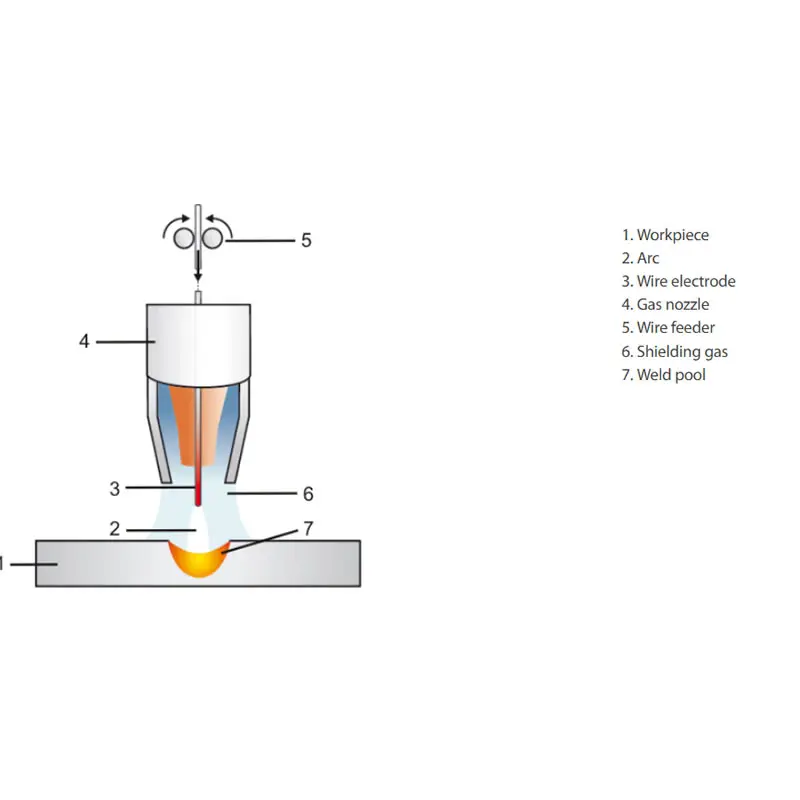
MIG welding, short for Metal Inert-Gas Welding, is an arc welding method that uses a continuously fed consumable wire as the electrode and inert gases such as argon (Ar) or helium (He) as the shielding medium.

As an important branch of Gas Metal Arc Welding (GMAW), the key difference between MIG welding and MAG welding lies in the nature of the shielding gas—MIG welding uses a completely inert gas, while MAG welding uses an active gas (such as CO₂ or a mixture thereof).

Inquiry Now PDF Download

Introduction

Flexible Leasing & Sales

Breaking away from the single sales model, we offer diversified solutions combining "equipment sales + flexible leasing".

Non-standard customization

We provide professional non-standard equipment customization services to address customers' specific workpiece materials and complex process pain points.

Special Builds

If you have unique requirements, we offer special design options tailored to your specific requests.

Specification

MIG welding vs Manual welding
TechnologyMIGSMAW
Operating methodSemi-automatic/automatic, continuous wire feedingEntirely manual, each welding rod needs to be replaced.
Welding speedFastSlow
Weld appearanceSmooth and aesthetically pleasing, minimal splatterSlag present, appearance is average.
Wind resistancePoor performance, unsuitable for windy outdoor environmentsGood, strong wind resistance with flux coating.
Skill requirementsLow cost, easy to learnHigh, requires extensive practice.
Equipment costHigh cost (welding machine + gas cylinder + wire feeding)Low (welding machine + welding clamp only).
Applicable thicknessSuitable for thin to medium-thick platesMedium to heavy plates.
Typical applicationsSuitable for indoor mass production, automationOutdoor repair, on-site construction.

Competitive Advantage

What are the characteristics of MIG welding?
Continuous wire feeding and high-efficiency welding: The welding wire is automatically fed through a wire feeding mechanism, allowing for continuous welding for extended periods. Welding speed and deposition efficiency are significantly higher than traditional manual welding.
Multiple droplet transfer modes: Supports various droplet transfer modes, including short-circuit transfer, jet transfer, and pulse transfer, adaptable to different material thicknesses and welding positions.
Wide range of applicable materials: Particularly suitable for welding non-ferrous metals such as aluminum, magnesium, titanium, and copper, as well as materials requiring high-quality protection, such as stainless steel.
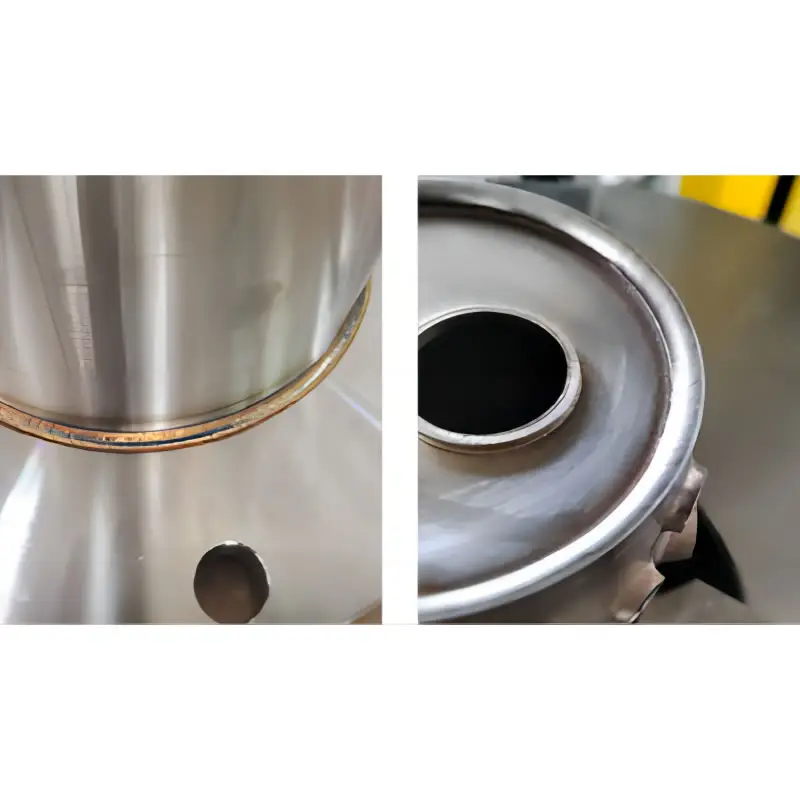
High weld quality: Inert gas protection effectively prevents oxidation, resulting in less spatter and a smooth, aesthetically pleasing weld.
Easy to automate: Automatic wire feeding and stable parameters make it one of the most commonly used processes in robotic welding and automated production lines.


What are the advantages of MIG welding?
Extremely high welding efficiency: Continuous wire feeding eliminates the need for frequent consumable changes, resulting in fast welding speeds and significantly higher production efficiency than TIG welding and manual arc welding. It is widely used in mass production scenarios in industries such as automotive manufacturing and machining.
Excellent weld quality: Under inert gas protection, the arc is stable, the molten droplet transfer is uniform, spatter is minimal, the weld formation is smooth and aesthetically pleasing, and cleaning is minimal.
Lower learning curve: Compared to manual welding (which requires coordinated operation of both hands and high skill level), MIG welding is simpler in terms of arc initiation and torch handling, making it easier for beginners to get started.
Wide range of applicable materials: It can weld almost all metal materials, primarily used for welding non-ferrous metals and their alloys, stainless steel, and certain alloy steels.
Easy to automate and mechanize: Stable parameters make it ideal for standardized, large-scale production in conjunction with robots or automated mechanical walking structures.
What are the disadvantages of MIG welding?


High equipment cost: It requires a welding machine, wire feeder, shielding gas cylinder, and flow meter, making the overall equipment more complex and expensive than manual arc welding.
Poor wind resistance: The inert gas shielding layer is easily blown away by the wind. Windy outdoor environments can severely affect welding quality, requiring the construction of windproof shelters or the use of other processes.
High requirements for workpiece surface cleanliness: Oil, rust, and other impurities can easily lead to porosity or slag inclusions, requiring strict cleaning before welding.
Limited accessibility: The welding torch is relatively large, making it inconvenient to operate in narrow spaces or complex joints.
Easily burn-through in thin plates: When welding ultra-thin materials (e. g. , <1mm), improper heat input control can easily lead to burn-through.
Potential for incomplete fusion/penetration defects: Improper parameter settings (e. g. , voltage/current mismatch) can easily result in incomplete fusion or incomplete penetration in thick plates or complex joints.

Selection Recommendations (When is MIG Welding Suitable?)

Thickness Range:

Thin Plates (0.8–3 mm): Short-circuit transfer or pulsed MIG is ideal, offering fast welding speed and minimal deformation. MIG welding can typically achieve a minimum thickness of around 1 mm.
Medium-Thick Plates (3–12 mm): Jet transfer or pulsed MIG provides good penetration, with excellent single-sided welding and double-sided forming.


Recommended Materials:
Aluminum Alloys: MIG welding is the preferred choice, using pure argon shielding. Pulsed MIG effectively reduces spatter and porosity. Flat welding of aluminum alloys without beveling yields the best results for thicknesses of 3–6 mm.
Stainless Steel: MIG welding uses an argon-rich gas mixture (98% Ar + 2% CO₂), providing good protection and suitable for 1–6 mm thick stainless steel plates.
Copper, Magnesium, and Titanium Alloys: MIG welding uses pure argon or an argon/helium mixture for shielding, making it an ideal welding method.


Joint Types:
Butt Welds: Very suitable, especially when combined with an automated welding mechanism for high-speed welding of long, straight seams.
Fillet welds: Highly efficient fillet welds are ideal for T-joints and lap joints.
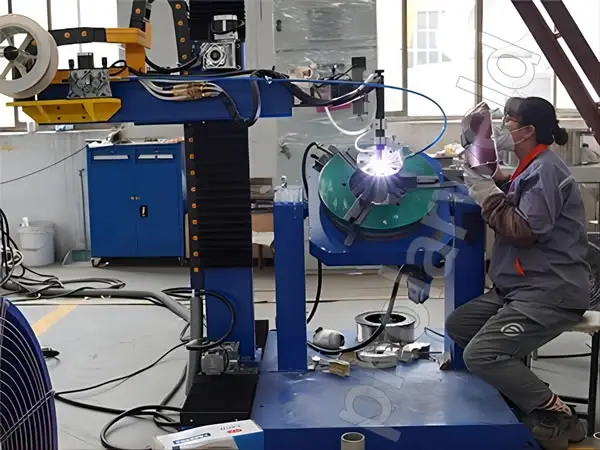
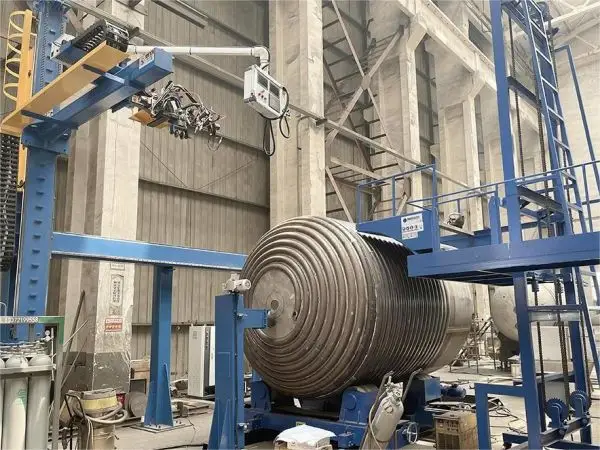
Circumferential welds: When used with roller frames or positioners, circumferential welds of pipes and cylinders can be completed efficiently.


Typical applications:
Automotive manufacturing: Widespread use of robotic MIG welding or resistance spot welding for thin-plate welding of body, chassis, and exhaust pipes.
Shipbuilding: High efficiency when using a combination of MAG and MIG welding for medium-thick plates in ship hull structures.
Rail transportation: Widely used in aluminum alloy vehicle body manufacturing, offering fast welding speeds and aesthetically pleasing welds.
Machining: Mass production of various structural components, frames, and chassis.
Aluminum product processing: An irreplaceable process for aluminum doors and windows, radiators, and aluminum shells.

Application

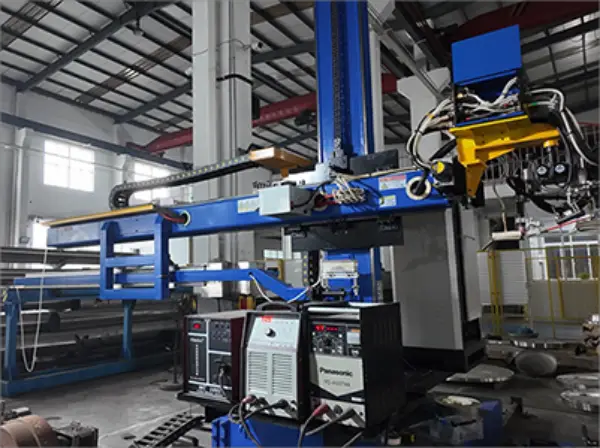
Gantry Side-beam Auto Welding Equipment
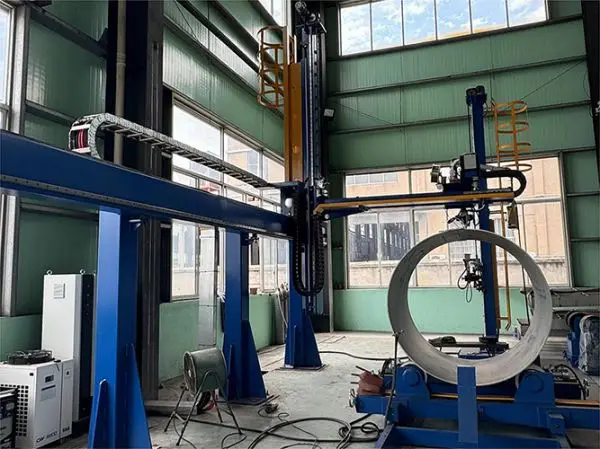
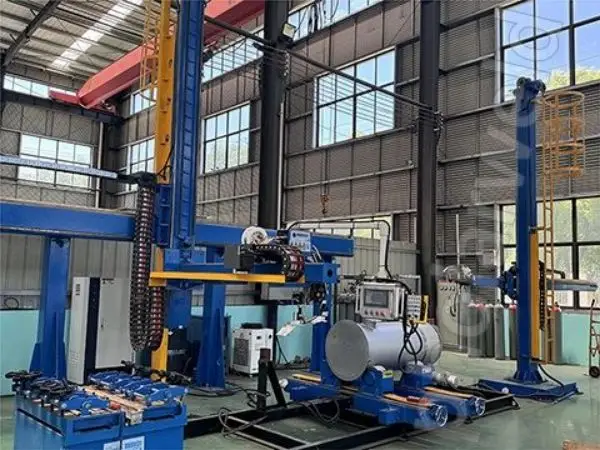
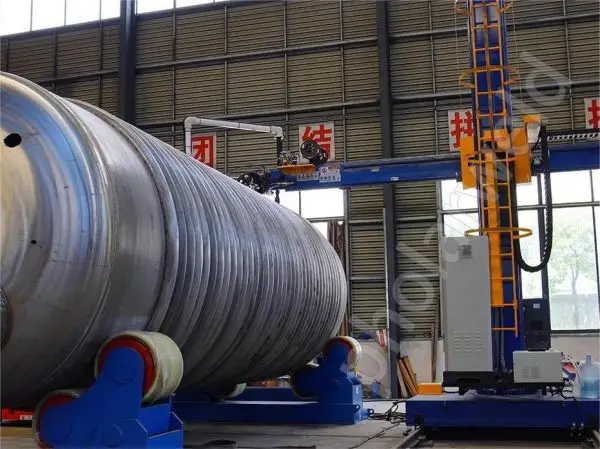
Cylinder Coil Pipe Auto Welding Equipment
Auto Plate Butt Welding Machine Configuration
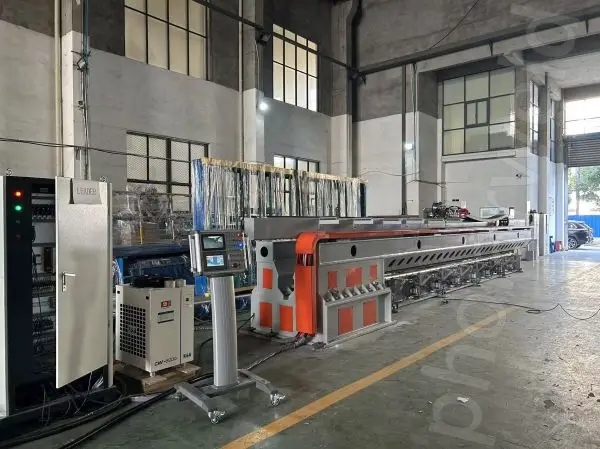
Gantry Side-beam Auto Welding Equipment

Faqs

  • What types of automated equipment does your company primarily sales?

    Our company specializes in the research, development, manufacturing, installation, and sales of various automated plasma welding equipment, deep penetration welding equipment, robotic welding stations, wear-resistant surfacing equipment, welding auxiliary equipment, robotic cutting workstations, grinding and polishing machines, automatic coiling pipe machines, and non-standard automated production lines. We also handle and act as an agent for various import and export businesses.

  • What after-sales services are provided for this equipment?

    Our company provides comprehensive after-sales services, covering equipment commissioning, parameter optimization, operator training, and long-term maintenance. In case of emergency malfunctions, we promise to provide remote guidance within 24 hours. We also conduct regular follow-up visits, spare parts supply, and technical consultation services to ensure your production runs smoothly.

  • Can I visit your company to observe equipment operation or perform trial welding?

    Yes. We welcome customers to visit our factory and observe equipment demonstrations. If needed, we can arrange trial welding using actual workpieces provided by you to verify the equipment's process effectiveness and weld quality.

  • How much more efficient is automated welding equipment compared to manual welding?

    Automated welding equipment can operate continuously for 24 hours. For the same weld specifications, the time required is reduced by 2-3 hours compared to manual welding, increasing efficiency by over 60%. For example, a job that would take 3 skilled welders 3 days to complete can be finished with high quality in 1 day by a single welding robot, while also reducing wire and gas consumption by 20%-40%. Overall, automated welding can reduce labor costs by approximately 60%.

Talk to Our Expert

Send us your quote request and we will generate a quote for you with all the information you need.

Talk To Our Expert