
 EN
EN
 EN
EN AR
AR BG
BG HR
HR CS
CS NL
NL FR
FR DE
DE EL
EL IT
IT JA
JA KO
KO PL
PL PT
PT RO
RO RU
RU ES
ES SV
SV IW
IW ID
ID VI
VI HU
HU TH
TH TR
TR FA
FA MS
MS

A Column & Boom Welding Manipulator is designed to make welding large and heavy workpieces easier, safer, and more consistent. Instead of asking a welder to move around a large vessel or pipe, the machine positions the welding torch at the right height and distance while the workpiece or welding equipment moves in a controlled way. The system usually combines vertical and horizontal movement with adjustable welding speed and torch positioning. This setup is often used for pressure vessels, storage tanks, steel structures, and large-diameter pipes. Understanding how these movements work together helps operators set up the machine correctly and get a more stable weld.
Automated System Components of Column & Boom Welding Manipulator
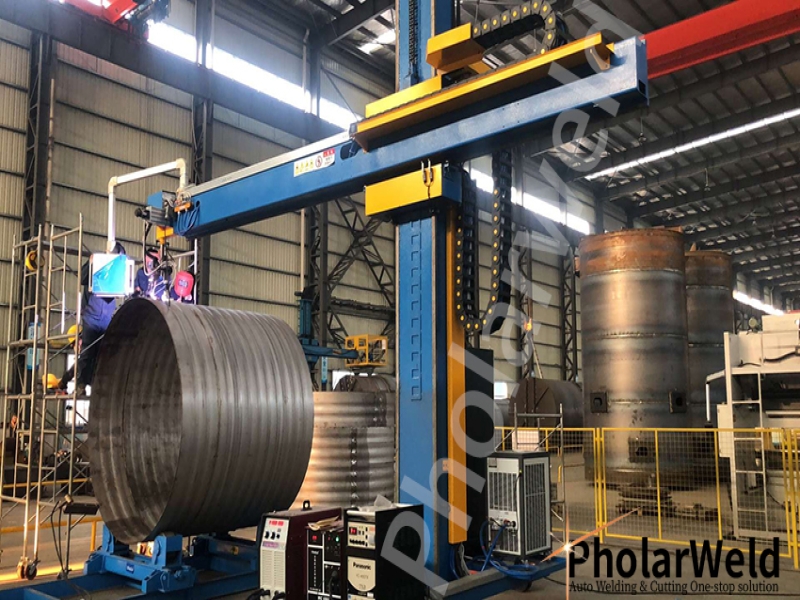
A Column & Boom Welding Manipulator has several automated parts that work together to keep the welding process steady and controlled. Each component has a specific job, but they need to work as one system during operation.
The column is the main vertical structure. It supports the boom and allows it to move up or down. This movement helps position the welding torch at the correct height for different workpieces. A motor and drive system normally control the vertical travel.
The boom is the horizontal arm that carries the welding torch and related equipment. It can move forward and backward, allowing the torch to reach different areas of a large pipe, tank, or vessel. The operator can adjust the boom position to keep the torch at a suitable working distance.
The welding head is mounted on the boom and holds the torch, wire feeder, and other welding parts. Depending on the machine design, the welding head may also have small adjustment movements for better torch alignment. This is useful when the joint is not perfectly positioned.
The control system acts as the machine's command center. It controls travel speed, boom and column movement, welding start and stop functions, and other operating settings. A control panel or pendant gives the operator a simple way to make adjustments while watching the welding process.
A limit switch and safety system helps prevent the column or boom from moving beyond its safe travel range. Emergency-stop controls can also shut down movement quickly when a problem occurs.
Finally, the power and drive system supplies the motors with controlled power for smooth movement. When these components are properly set up, the manipulator can maintain a steady torch position and welding speed, reducing the need for constant manual adjustment. For example, when welding a long seam on a storage tank, the operator can set the boom position and travel speed once and allow the system to maintain consistent movement along the joint.
How to Choose the Right Welding Process for a Welding Manipulator?
Choosing the right welding process for a Column & Boom Welding Manipulator starts with looking at the workpiece, joint design, material, and production needs. The manipulator itself does not decide which process should be used. Instead, it provides controlled torch movement so the selected welding process can work more consistently.
Submerged Arc Welding (SAW) is a common choice for large steel structures, pressure vessels, storage tanks, and long straight seams. It works well when high welding speed and good deposition rates are needed. Since the arc is covered by granular flux, it is also suitable for long welds where the torch can move steadily along the joint.
MIG/MAG welding, also known as GMAW, can be a better option when flexibility is more important. It can handle different joint positions and is often used for carbon steel, stainless steel, and other materials. A welding manipulator can keep the torch at a steady distance from the joint while the wire feeder supplies the electrode.
For certain jobs, TIG welding may be selected when cleaner and more controlled welds are needed. TIG is slower than SAW or MIG/MAG, so it is usually better suited to applications where weld quality and control matter more than high production speed.
The workpiece size also matters. If a fabricator is welding a large-diameter pipe with a long circumferential seam, a process with a good deposition rate can save considerable time. On smaller or more detailed joints, a flexible process may make setup easier.
Before choosing, check the material thickness, required weld quality, joint shape, welding position, production volume, and available wire and shielding or flux system. It is also helpful to run a test weld before full production. A practical test can show whether the selected process gives the required penetration, bead shape, and travel speed while working smoothly with the manipulator.
How to Choose Between Dual-Beam, Cantilever or Extended Welding Manipulator?
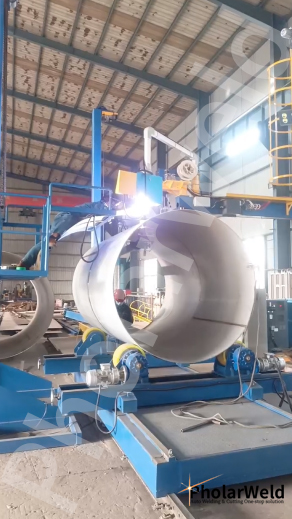
Choosing between a dual-beam, cantilever, or extended welding manipulator depends mainly on the size of the workpiece, the welding area, and how much reach the job requires. Each design handles large welding tasks differently, so the best option should match the actual production setup rather than simply choosing the largest machine.
A dual-beam welding manipulator is a good choice when two welding heads need to work at the same time or when a larger structure needs balanced support. It can help improve production efficiency on applications such as large pressure vessels, tanks, and long structural welds. If two welds can be completed together without affecting quality, this design can reduce overall production time.
A cantilever welding manipulator has a boom supported from one side, giving it useful access to the workpiece. It is often suitable when the welding area is relatively open and the operator needs convenient access around the job. Its compact arrangement can also work well where floor space is limited.
An extended pipe welding machine manipulator is designed for applications where the welding torch needs to reach a greater distance. This can be useful for large-diameter pipes, long vessels, or structures where the joint is positioned far from the main column. Before choosing this type, check the required reach and the weight of the welding equipment because a longer boom needs enough rigidity to avoid unwanted movement.
For example, imagine a workshop that regularly welds large storage tanks. If the welding joints are long and production volume is high, a dual-beam system may be practical. If the jobs vary in size and require easier access, a cantilever design may offer more flexibility. If the main problem is simply reaching deep or distant joints, an extended model may be the better fit.
Before making a decision, compare working height, horizontal reach, load capacity, travel speed, available floor space, workpiece dimensions, and the number of welding heads required. A simple layout drawing of the work area can also help confirm which manipulator can reach every required welding position safely.
When Should You Use a Welding Manipulator in Production?
A welding manipulator becomes useful when welding work is too large, repetitive, or time-consuming to handle comfortably by hand. It is especially helpful when the same type of weld needs to be produced many times with steady torch movement. Instead of having a welder constantly adjust their position, the manipulator moves the welding head along the joint at a controlled speed.
One common situation is large workpieces. Storage tanks, pressure vessels, boilers, pipes, and heavy steel structures can have welds that extend several meters. Asking a welder to follow such a joint manually can be tiring and may make it harder to keep the torch angle and travel speed consistent. A manipulator keeps the torch positioned while the operator monitors the welding process.
It is also a good option for repetitive production. For example, a workshop producing several similar cylindrical tanks may need to weld the same longitudinal or circumferential joints again and again. Once the machine settings and torch position are properly adjusted, the operator can repeat the process with less manual movement.
Another reason to use a manipulator is better working conditions. The machine can help keep the welding head at a suitable height and distance, reducing the need for awkward working positions. This can make long welding jobs more manageable for operators.
You should also think about how much you plan to produce. If the workshop only does a few big welding jobs now and then, a manipulator might not be worth the effort to set up. But if you're doing regular work with long welds, the time saved and more consistent results can really help.
Before adding one to a production line, check the workpiece dimensions, weld length, production quantity, welding process, required travel speed, and available workspace. If operators are spending a large part of their day manually following long welds, that is a practical sign that a welding manipulator may be worth considering.
What Are the Advantages of a Welding Manipulator Over Manual Welding?
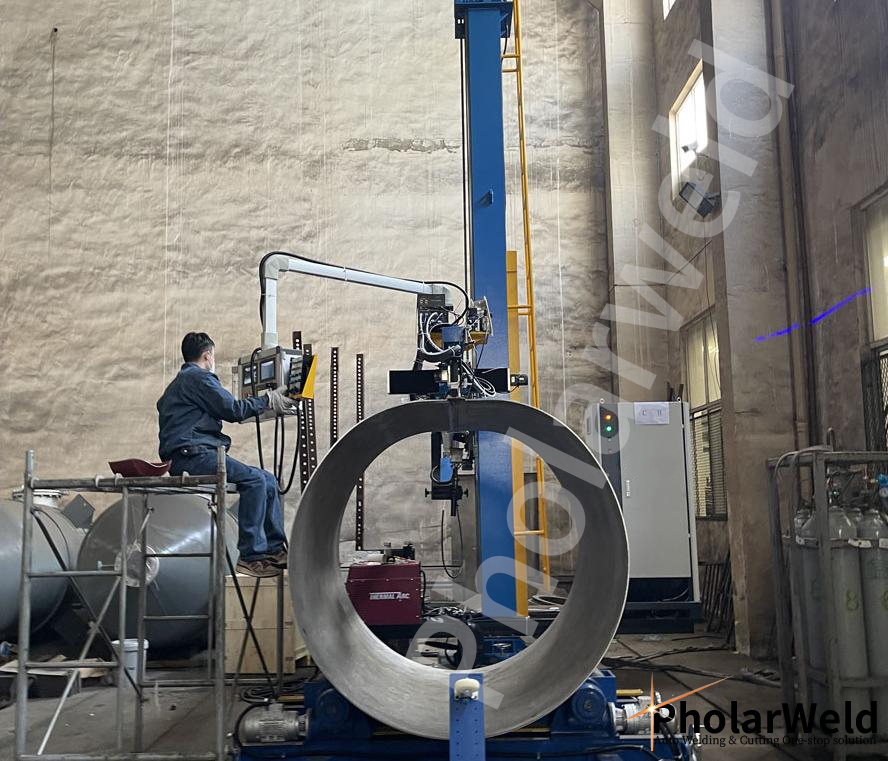
A welding manipulator can make a big difference when compared with fully manual welding, especially for large and repetitive jobs. The main advantage is better control over the movement of the welding torch. Instead of asking a welder to move the torch by hand along a long joint, the machine can maintain a steady travel speed and position. This can help produce more consistent welds from one section to another.
Consistent welding quality is one of the main benefits. Manual welding depends heavily on the welder's skill, concentration, and physical condition. During a long weld, small changes in torch angle or travel speed can affect the bead. A column and boom welding machine keeps these movements more stable once the machine has been correctly set.
Higher production efficiency is another advantage. A machine can continuously move along a long welding seam without the operator needing to walk, reposition, or repeatedly adjust their body position. For example, when welding several large storage tanks, the same settings can often be repeated for similar joints, saving setup and welding time.
A manipulator can also improve operator comfort and safety. Large welding jobs may require awkward positions, reaching, bending, or standing for extended periods. By positioning the welding head mechanically, the operator can spend more time monitoring the process instead of physically following the weld.
There can also be less variation between welds. This is especially useful in production environments where many similar components need to meet the same welding requirements.
However, a manipulator does not replace operator skill. Correct welding parameters, joint preparation, torch alignment, and machine setup are still important. Before starting production, run a test weld and check penetration, bead appearance, travel speed, and torch position. When these factors are properly controlled, a welding manipulator can provide a practical advantage over manual welding for large and repetitive work.
Table of Contents
- Automated System Components of Column & Boom Welding Manipulator
- How to Choose the Right Welding Process for a Welding Manipulator?
- How to Choose Between Dual-Beam, Cantilever or Extended Welding Manipulator?
- When Should You Use a Welding Manipulator in Production?
- What Are the Advantages of a Welding Manipulator Over Manual Welding?