 EN
EN
 EN
EN AR
AR BG
BG HR
HR CS
CS NL
NL FR
FR DE
DE EL
EL IT
IT JA
JA KO
KO PL
PL PT
PT RO
RO RU
RU ES
ES SV
SV IW
IW ID
ID VI
VI HU
HU TH
TH TR
TR FA
FA MS
MS

Robotically based welding stations have altered the approach used by most factories for joining of metals. In these welding stations, there is a combination of a robot, a welding machine, sensors, and control software that enable a weld to be done with an even speed and quality. They can be used in various industries including those producing cars, construction equipment, agriculture equipment, and metal furniture. Despite its complexity, the concept behind a robot welding automation solutions is quite simple. The robot welding station is guided by a programmed sequence in which it directs the welding torch along a predetermined trajectory.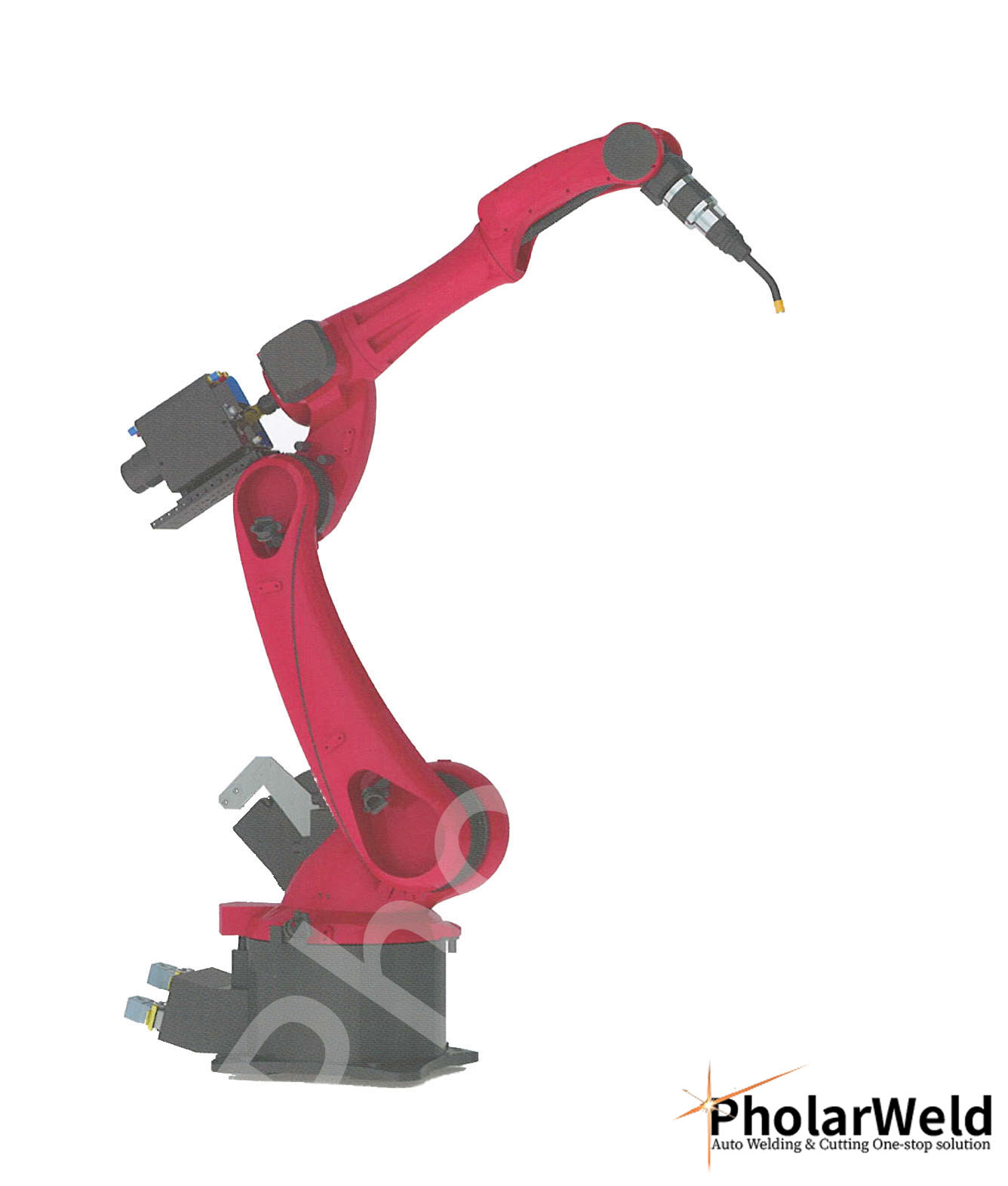
Core components of a robotic welding station
A robotic welding station is made up of several parts that work together to produce accurate and repeatable welds. Each component has its own job, and the overall performance depends on how well these parts are matched and integrated. Understanding these core components can help manufacturers choose the right system for their production needs and identify areas for future upgrades.
The industrial robot is the heart of the welding station. It is responsible for moving the welding torch along the programmed path with high precision. Most welding robots have six axes, giving them the flexibility to reach different angles and weld complex parts. This allows the robot to handle everything from small brackets to large machine frames without sacrificing accuracy.
The welding power source provides the energy needed to create the welding arc. Depending on the application, the station may use MIG, TIG, or laser welding equipment. Modern power sources work closely with the robot controller, adjusting current, voltage, and wire feed speed during the welding process. This helps maintain stable weld quality, even when welding different materials or joint designs.
The welding torch is mounted on the robot arm and delivers the welding wire, shielding gas, and electrical current to the workpiece. Since it is exposed to high temperatures and constant movement, regular inspection and replacement of wear parts such as contact tips and nozzles help keep the system running smoothly.
The robot controller acts as the station's control center. It stores welding programs, manages robot movements, and communicates with other equipment. Operators use the controller to create welding paths, adjust welding settings, and monitor production. Many newer controllers also support remote diagnostics and production data tracking, making maintenance and troubleshooting much easier.
Fixtures and positioners hold the workpiece securely during welding. A stable fixture prevents movement that could affect weld quality, while a welding positioner rotates or tilts the part so the robot can weld from the best angle. For example, when producing large steel tanks or pipe sections, a positioner allows the robot to perform continuous welds without stopping to reposition the workpiece manually.
Safety equipment is another essential part of the station. Protective fencing, light curtains, safety scanners, emergency stop buttons, and interlock systems protect workers while allowing the robot to operate efficiently. Many stations also include fume extraction systems to improve air quality by removing welding smoke and particles.
Many robotic welding stations also include vision cameras or seam-tracking sensors. These devices help the robot detect slight differences in part position and automatically adjust the welding path. This is especially useful when working with parts that have small manufacturing variations, reducing scrap and improving production consistency.
When all of these components work together, a robotic welding station becomes a reliable system capable of producing high-quality welds with less manual effort, shorter production times, and more consistent results across large production runs.
Robot path trajectory and control logic
The movement of a welding robot is carefully planned before production begins. Instead of moving randomly, the robot follows a programmed path that tells it exactly where to travel, how fast to move, and when to start or stop welding. This planned movement is called the robot path trajectory. Good path planning is one of the biggest reasons robotic welding stations can produce consistent welds over long production runs.
The process starts with programming the robot. An engineer or operator teaches the robot a series of points that define the welding path. This can be done by manually guiding the robot with a teach pendant or by creating the program offline using simulation software. Once these points are saved, the robot repeats the same movement every cycle with very little variation.
The control system calculates the best way to move between each point. It adjusts the position of every robot joint at the same time so the welding torch travels smoothly. During this movement, the controller also manages travel speed, torch angle, welding current, voltage, wire feed speed, and shielding gas flow. All of these settings work together to produce a stable weld.
The robot does not always move at the same speed. Before reaching the weld joint, it travels quickly to reduce idle time. As soon as welding begins, it slows down to maintain the correct heat input and bead shape. After the weld is complete, it speeds up again while moving to the next position. This balance between fast positioning and controlled welding helps improve both quality and productivity.
For more complex parts, the robot may need to weld around curves, corners, or circular surfaces. The controller creates smooth transitions between different movements so the torch keeps a steady distance and angle from the workpiece. This reduces sudden changes that could cause uneven welds or defects.
Many modern robotic welding stations also include seam-tracking sensors or vision systems. These tools allow the robot to detect small changes in the position of the workpiece. If a metal part is slightly out of place, the controller adjusts the welding path automatically instead of continuing with the original program. This feature helps reduce rework and keeps production running even when part dimensions vary slightly.
A good example is an automotive production line. Thousands of vehicle frames are welded every day, and each frame must meet the same quality standard. The robot follows the same programmed trajectory for every unit while sensors make small corrections whenever needed. This combination of accurate path planning and intelligent control allows manufacturers to produce reliable welds with less waste, fewer defects, and minimal manual intervention.
Teaching and offline programming methods for welding programs
Creating a welding program is one of the most important steps in setting up a robotic welding station. The program tells the robot where to move, when to start welding, and what welding settings to use. There are two common ways to create these programs: robot teaching and offline programming. Each method has its own strengths, and many manufacturers use both depending on the job.
Robot teaching is the traditional approach. An operator uses a handheld teach pendant to move the robot to each welding position. Every point is recorded one by one until the complete welding path is created. After saving the program, the operator runs test cycles and makes small adjustments to improve torch angle, travel speed, and welding quality. This method is simple and works well for small production runs, custom products, or new projects that need frequent changes.
For example, a metal fabrication shop that produces custom machinery may build different frames every week. Since each design is unique, teaching the robot directly allows operators to make quick changes without creating a completely new digital model.
Offline programming takes a different approach. Instead of programming on the factory floor, engineers create the welding program on a computer using 3D models of the robot, fixtures, and workpieces. The software simulates the entire welding process before the program is transferred to the robot. This allows engineers to check robot reach, detect possible collisions, and optimize welding paths without stopping production.
One of the biggest advantages of offline programming is reduced downtime. While the robot continues welding current orders, engineers can prepare programs for future products. Once the new program is ready, it can be loaded into the robot and tested with only minor adjustments. This is especially useful in industries with high production volumes, where every hour of machine availability matters.
Many manufacturers combine both methods. They create the initial program offline to save time and avoid production interruptions. After the program is loaded into the robot, operators perform a short teaching session to fine-tune welding points, torch angles, or travel speeds based on actual production conditions. This hybrid approach provides both efficiency and flexibility.
Choosing the right programming method depends on production volume, product variety, and available engineering resources. Companies that produce the same parts in large quantities often benefit from offline programming, while businesses handling low-volume or customized work may rely more on robot teaching. By understanding both methods, manufacturers can select the approach that best matches their production goals while maintaining high welding quality and efficient operation.
Collaborative work of the welding power source, wire feeding mechanism and robot
A robotic welding station delivers stable and repeatable welds because several systems work together at the same time. The robot provides accurate movement, the welding power source generates the welding arc, and the wire feeding mechanism supplies filler wire at a controlled speed. If any one of these components is not properly synchronized, weld quality can quickly decline. Understanding how they cooperate makes it easier to troubleshoot problems and improve production efficiency.
The process begins when the robot moves the welding torch to the starting point of the weld. Once it reaches the correct position, the controller sends a signal to the welding power source to start the arc. At the same time, the wire feeder begins pushing welding wire through the welding torch at the programmed speed. Shielding gas also flows through the torch to protect the molten weld pool from contamination.
During welding, the robot controls the torch position, travel speed, and welding angle. These movements must stay steady because even small changes can affect weld penetration and bead appearance. While the robot guides the torch, the welding power source continuously adjusts the electrical output to keep the arc stable. Modern digital power sources can react almost instantly to small changes in arc length, helping maintain consistent welding quality.
The wire feeding mechanism also plays a key role. It delivers filler wire smoothly and continuously without slipping or jamming. If the wire feed speed is too slow, the weld may become weak or uneven. If it is too fast, excess material can create spatter or an irregular weld bead. The controller keeps the wire feed speed matched with the robot's travel speed so both systems stay balanced throughout the weld.
A good example is the production of construction equipment. Large steel parts often contain long weld seams that require both strength and a clean appearance. As the robot moves along each joint, the power source maintains a stable arc while the wire feeder supplies the exact amount of filler metal needed. Because these three systems work together, every weld remains consistent from the first part to the last.
Many advanced robotic welding stations also include real-time monitoring. Sensors track welding current, voltage, wire feed speed, and robot movement during production. If the system detects an abnormal condition, such as unstable wire feeding or an interrupted arc, it can alert the operator or pause the welding cycle before defective parts are produced.
When the robot, welding power source, and wire feeding mechanism operate as a coordinated system, manufacturers achieve higher productivity, better weld consistency, less rework, and more reliable production. Regular maintenance of all three components is just as important as accurate programming, since smooth cooperation depends on every part performing as expected.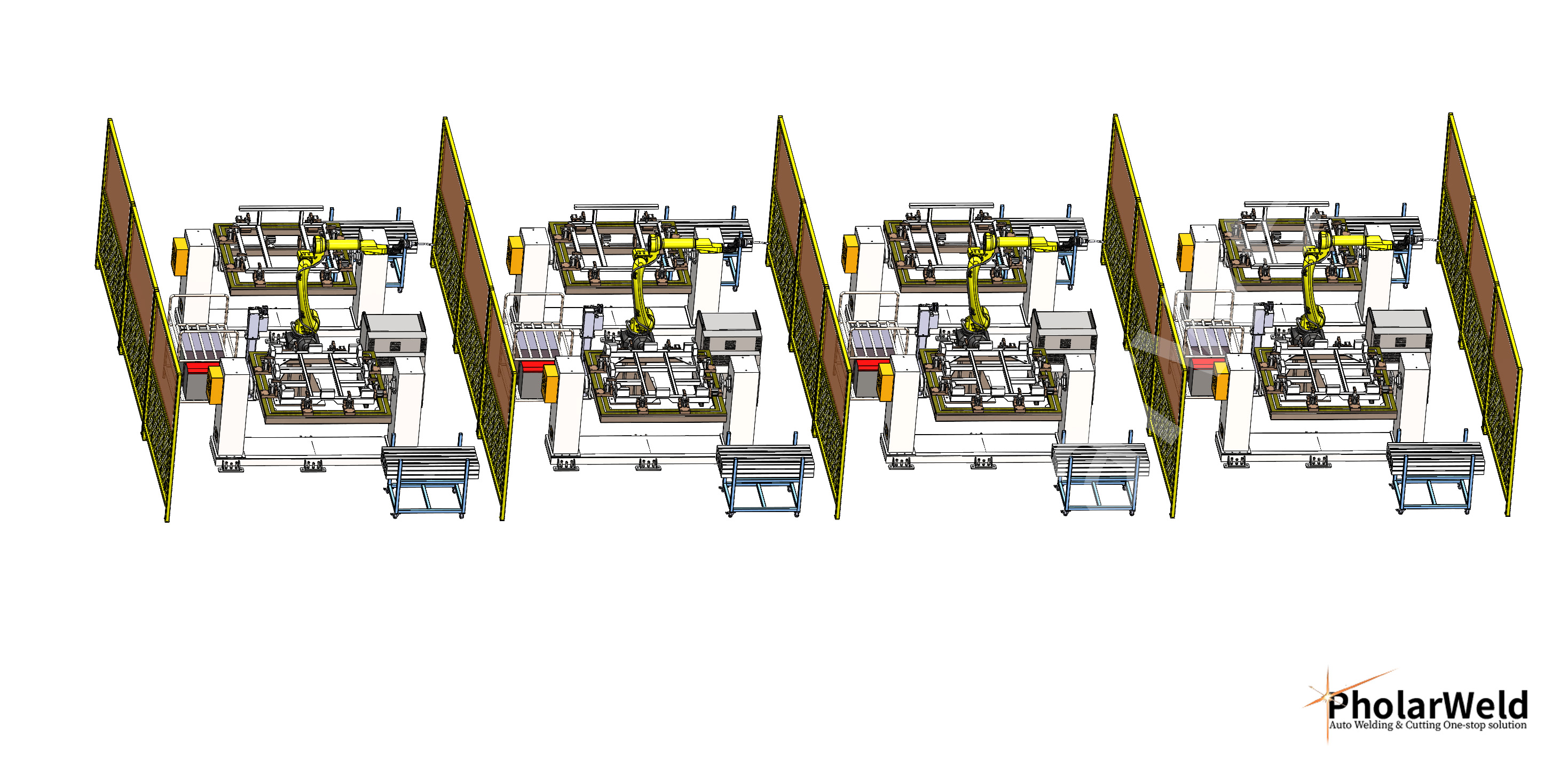
The role of positioners and fixtures in the welding station
Positioners and fixtures are often overlooked when people talk about robotic welding stations, but they have a major impact on weld quality and production efficiency. Even the most advanced welding robot cannot produce consistent results if the workpiece moves during welding or is placed in the wrong position. These supporting devices keep every part stable and present it to the robot at the best angle for welding.
A fixture is designed to hold the workpiece firmly in place throughout the welding process. It uses clamps, locating pins, and support blocks to keep each part in the correct position. This ensures that every workpiece is loaded the same way, allowing the robot to follow the same welding program repeatedly. Without a reliable fixture, even a small shift in the part can cause the welding torch to miss the joint or produce uneven welds.
For example, a company that manufactures metal cabinets may weld hundreds of identical frames every day. A well-designed fixture allows workers to load each frame quickly while making sure every component is aligned correctly before welding begins. This reduces setup time and helps maintain consistent product quality.
A welding positioner works differently. Instead of holding the part still, it rotates or tilts the workpiece so the robot can reach different weld joints without changing its own position too much. Keeping the weld in a favorable position often produces smoother weld beads, better penetration, and fewer welding defects. It also allows the robot to maintain a steady travel speed and torch angle during the entire weld.
Positioners come in different designs to match different applications. Single-axis models rotate the workpiece, while dual-axis models can both rotate and tilt it. Larger systems may include headstock and tailstock units that support long or heavy parts such as pipes, pressure vessels, or structural beams.
The robot, positioner, and fixture work as a coordinated system. Before welding begins, the fixture secures the workpiece. During the welding cycle, the positioner moves the part according to the programmed sequence while the robot adjusts its movements to match. The controller synchronizes both devices so the welding rotator torch stays on the correct path throughout the operation.
Regular inspection is also important. Worn clamps, damaged locating pins, or loose fixture components can reduce positioning accuracy and lead to poor weld quality. Keeping fixtures clean and checking positioner movement during routine maintenance helps prevent these problems before they affect production.
By combining reliable fixtures with properly matched positioners, manufacturers can improve welding accuracy, shorten cycle times, reduce operator workload, and produce consistent welds across both small and large production runs. These supporting components may not attract as much attention as the robot itself, but they are essential for building an efficient and dependable robotic welding station.