
 EN
EN
 EN
EN AR
AR BG
BG HR
HR CS
CS NL
NL FR
FR DE
DE EL
EL IT
IT JA
JA KO
KO PL
PL PT
PT RO
RO RU
RU ES
ES SV
SV IW
IW ID
ID VI
VI HU
HU TH
TH TR
TR FA
FA MS
MS

If you have ever worked in metal fabrication or even been to a welding shop, then you would know that instead of rotating the welder around the workpiece, the heavier parts are usually rotated in case of welding. This is where the welding positioner becomes useful. The welding automation solutions is basically a mechanical device that positions and rotates the workpiece in such a way that the welder or the welding robot can access the joint at an optimal angle. It will increase the efficiency of the welder, decrease the fatigue of the operator, and speed up the whole welding process.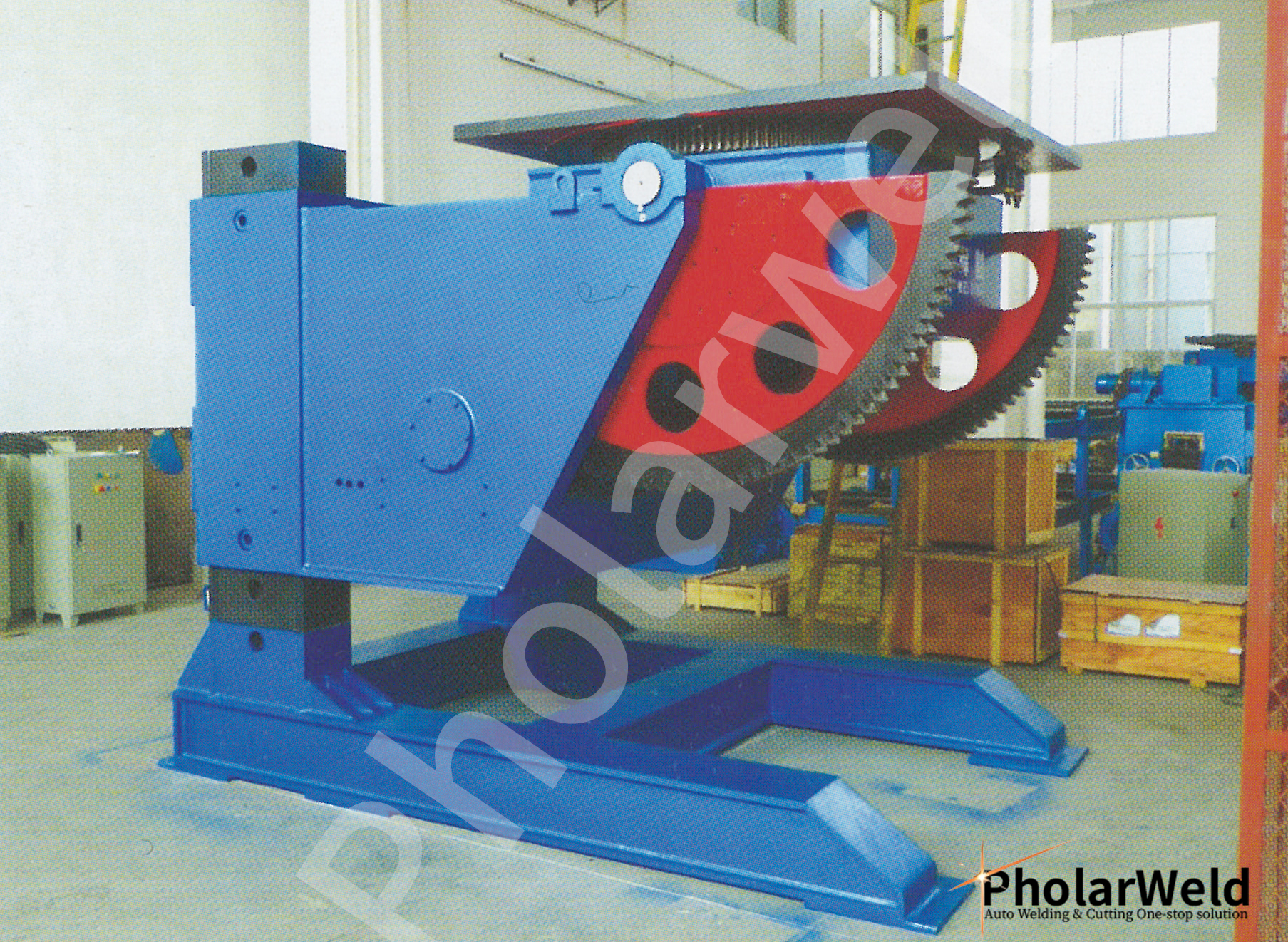
Working principle of a welding positioner
A welding positioner works by securely holding a workpiece and rotating or tilting it into the best position for welding. Instead of asking the welder to move around a heavy or awkward part, the machine brings the weld joint to a comfortable working angle. This makes the welding process smoother, helps produce more even welds, and reduces physical strain on the operator.
The process starts by attaching the workpiece to the positioner's worktable or chuck. The workpiece must be clamped firmly so it stays stable while the table moves. Before starting the weld, the operator checks that the load is balanced. A well-balanced workpiece places less stress on the motor and allows the table to rotate smoothly.
Once everything is secured, the operator sets the rotation speed and, if the machine has a tilting function, adjusts the table to the desired angle. Most modern welding positioners use an electric motor connected to a gearbox. The gearbox reduces the motor speed while increasing torque, allowing the machine to turn heavy workpieces in a controlled way. Some models include a foot pedal or remote control, making it easy to adjust movement while welding.
During welding, the table rotates at a steady speed so the welding torch can remain in one position while the workpiece moves. This is especially useful for circular welds on pipes, tanks, flanges, and pressure vessels. Keeping the weld in the flat or horizontal position often produces cleaner weld beads and lowers the chance of welding defects such as uneven penetration or excessive spatter.
In automated production, the welding positioner often works together with a welding robot. The robot follows a programmed welding path while the positioner rotates the workpiece at the correct speed. Both machines move in sync, helping manufacturers achieve consistent weld quality across large production batches.
For example, a company making steel pipe flanges can mount each flange on a welding positioner. Instead of stopping and repositioning the part several times, the machine rotates it continuously while the welder completes the joint in one smooth pass. This saves time, improves accuracy, and reduces operator fatigue. Before every job, always check the workpiece weight, clamp it securely, and confirm that the positioner is operating within its rated load capacity. These simple steps help keep the welding process safe, stable, and efficient.
Basic components of a welding positioner
A welding positioner is made up of several key parts that work together to hold, rotate, and tilt a workpiece during welding. Each component has a specific job, and understanding these parts makes it easier to operate the machine safely and choose the right model for different applications.
The most visible part is the worktable or faceplate. This is the flat surface where the workpiece is mounted. Depending on the application, the table may include T-slots, mounting holes, or a welding chuck to secure round or irregular-shaped parts. A stable mounting surface keeps the workpiece from shifting while it rotates.
The drive motor provides the power needed to turn the worktable. Most welding positioners use an electric motor because it delivers smooth and reliable movement. The motor is connected to a gearbox, which reduces the rotation speed while increasing torque. This allows the machine to handle heavy workpieces without losing control.
Another important part is the tilting mechanism. Many welding positioners can tilt the worktable from a horizontal position to a vertical one or anywhere in between. This feature allows the operator to place the weld joint at the most comfortable angle. On smaller machines, tilting may be adjusted by hand. Larger models often use powered hydraulic or electric systems.
The control system lets the operator manage the machine's movement. Controls usually include buttons or switches for starting and stopping rotation, changing direction, adjusting speed, and controlling the tilt angle. Many machines also come with a foot pedal or handheld remote, allowing the operator to make small adjustments without leaving the welding area.
The base frame supports the entire machine. It is built from heavy steel to provide stability and reduce vibration during operation. A strong frame is especially important when welding large pipes, tanks, or structural components.
Safety features are also an important part of a welding positioner. These may include emergency stop buttons, overload protection, limit switches, and secure locking systems that prevent unwanted movement while the workpiece is being loaded or unloaded.
For example, a fabrication shop producing stainless steel tanks may mount the tank section on the worktable, lock it in place with clamps, set the desired tilt angle, and control the rotation with a foot pedal while welding. Every component works together to keep the workpiece stable, making the welding process safer, more accurate, and easier to complete.
Differences between single column and head tailstock welding positioners
Choosing between a single column welding positioner and a head tailstock welding positioner depends on the size, shape, and weight of the workpiece. Both machines improve welding efficiency by placing the weld joint in a better position, but they are designed for different types of jobs.
A single column welding positioner supports the workpiece from one side. The workpiece is attached to a rotating worktable mounted on a single column, which can usually rotate and tilt. This design is simple, compact, and easy to operate. It works well for smaller or medium-sized parts such as flanges, valves, pipe fittings, wheels, and metal frames. Since the workpiece is supported from one end, it is best suited for components that are not too long or too heavy.
A head tailstock welding positioner supports the workpiece from both ends. The headstock contains the drive motor that rotates the workpiece, while the tailstock supports the opposite end and can often be adjusted to fit different workpiece lengths. This setup provides much better stability when welding long or heavy components such as pipelines, pressure vessels, structural beams, wind tower sections, and large shafts.
The biggest difference between the two systems is their load support. A single column model carries all the weight on one side, which limits the maximum workpiece length and may create more bending force on the machine. A head tailstock design spreads the weight across two support points, making it easier to rotate long workpieces smoothly and safely.
Another difference is flexibility. Single column positioners are usually quicker to load and unload, making them a good choice for workshops producing many smaller parts every day. Head tailstock systems often take a little more time to set up, but they provide better alignment and control for large fabrication projects where precision is important.
For example, a company manufacturing small pipe flanges can complete welding efficiently with a single column positioner because each part is compact and easy to support. On the other hand, a manufacturer producing 6-meter steel pipes would benefit from a head tailstock positioner, which keeps the pipe steady from both ends while it rotates during welding.
Before choosing a welding positioner, think about the maximum workpiece weight, length, diameter, and production volume. Matching the equipment to your typical jobs will improve weld quality, reduce setup time, and help the machine operate safely for many years.
How to choose the chuck size for a welding positioner?
Choosing the right chuck size for a welding positioner is just as important as selecting the machine itself. A chuck that is too small may not hold the workpiece securely, while one that is too large can add unnecessary weight and reduce the positioner's performance. The right choice depends on the workpiece size, weight, shape, and the type of welding you plan to do.
Start by looking at the diameter of your workpiece. The chuck should provide enough gripping area to hold the part firmly without damaging its surface. Small pipe fittings, flanges, and round bars usually work well with smaller chucks, while large pipes and pressure vessel components need larger models with a wider clamping range.
Next, check the weight of the workpiece. Every chuck has a maximum gripping capacity, and every welding positioner has a rated load. These two ratings should match your application. Even if the chuck can hold a heavy part, the positioner must also be able to rotate that weight safely. It is a good idea to leave some extra capacity instead of operating at the machine's maximum limit every day.
The shape of the workpiece also affects your choice. Standard three-jaw chucks are commonly used for round or hexagonal parts because they automatically center the workpiece. Four-jaw chucks are better for square, rectangular, or irregular-shaped components since each jaw can be adjusted separately. Some manufacturers also use custom fixtures for parts that cannot be held securely by a standard chuck.
Think about the required welding accuracy as well. A larger chuck with good clamping force helps reduce movement during rotation, leading to smoother welds. If your work involves precision welding, choose a chuck with high repeatability and reliable centering performance.
For example, a workshop that produces stainless steel pipe flanges with diameters of 200 to 400 mm can use a medium-sized three-jaw chuck that provides stable clamping and quick loading. A factory welding large pressure vessel sections may need a much larger chuck or a custom fixture to support the heavier components safely.
Before making a final decision, review the chuck's clamping range, maximum load, mounting method, and compatibility with the welding positioner. If your production includes several workpiece sizes, choosing a chuck with a wider adjustment range can reduce setup time and make the equipment more flexible for future projects.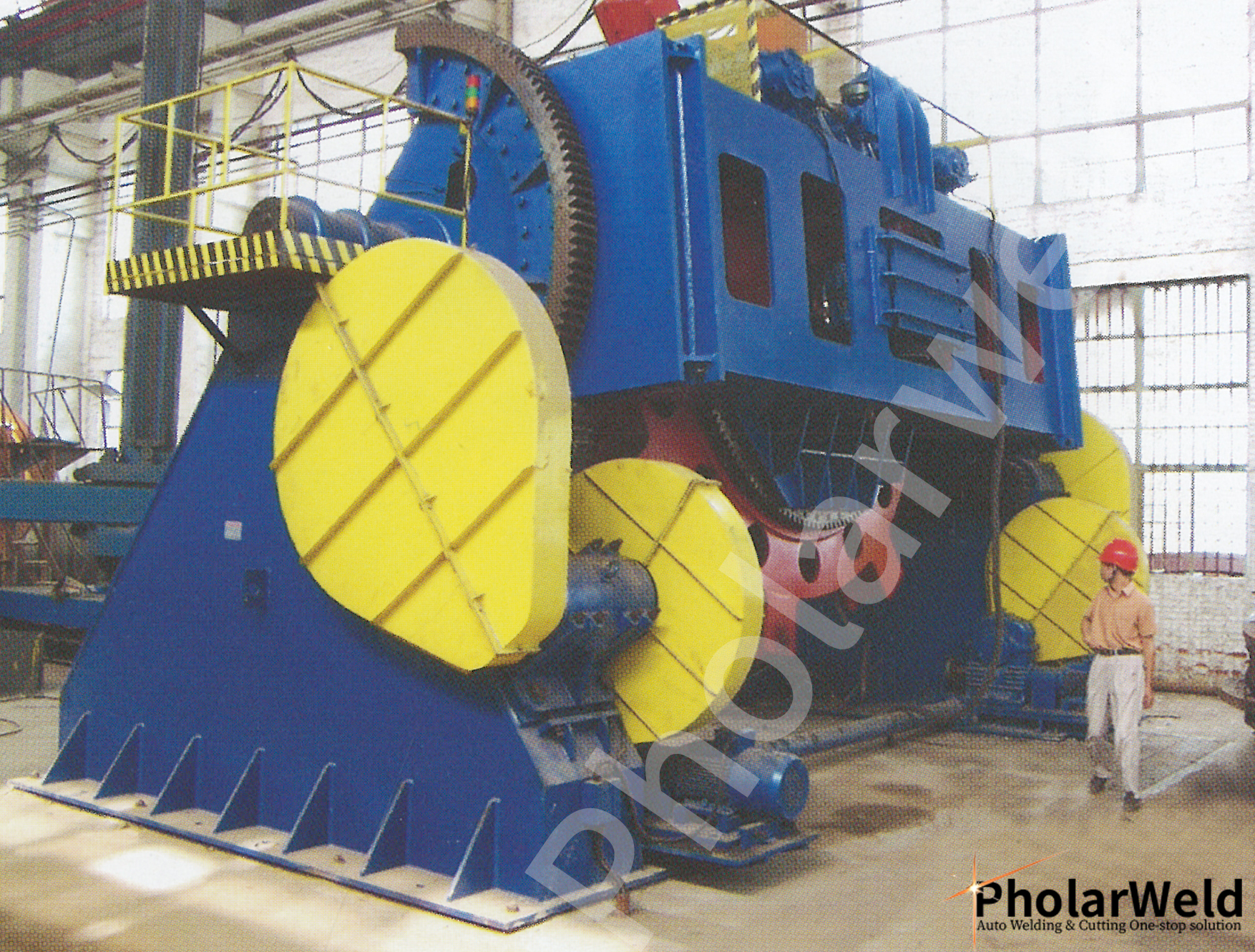
Applications of welding positioners
Welding positioners are used in many industries because they make it easier to weld parts safely, accurately, and efficiently. By rotating or tilting the workpiece into the best position, they help produce more consistent welds while reducing the need for workers to bend, climb, or repeatedly reposition heavy components.
One of the most common applications is pipe and pressure vessel manufacturing. Pipes, tanks, and cylinders often require long circular welds. A welding positioner rotates the workpiece at a steady speed, allowing the welder or welding robot to create a smooth, even weld without stopping to reposition the part. This improves weld quality and shortens production time.
Welding positioners are also widely used in structural steel fabrication. Companies producing beams, columns, frames, and heavy steel structures often deal with large components that are difficult to handle by hand. A positioner places the weld joint at a comfortable angle, helping welders work more efficiently and reducing physical strain during long shifts.
The automotive industry also relies on welding positioners. Manufacturers use them to weld vehicle frames, suspension parts, exhaust systems, and other metal components. Since many of these parts are produced in large quantities, positioners help maintain consistent weld quality from one part to the next.
In the construction equipment and agricultural machinery industries, welding positioners are used for products such as excavator arms, loader buckets, tractor frames, and machine attachments. These parts are often heavy and have welds on several sides. Rotating the workpiece instead of moving it with a crane after every weld saves time and improves workplace safety.
Another important application is robotic welding systems. In automated production lines, the welding manipulator works together with a welding robot. While the robot follows a programmed welding path, the positioner rotates or tilts the workpiece to keep the weld in the best position. This combination delivers stable quality and high productivity, making it ideal for mass production.
For example, a company manufacturing industrial storage tanks can mount each tank section on a welding positioner and complete the circular weld in one continuous rotation. Instead of stopping several times to adjust the workpiece, the welder can focus on maintaining a steady weld, leading to cleaner results and less rework.
Before selecting a welding positioner for any application, consider the workpiece size, weight, welding method, and daily production volume. Choosing equipment that matches your typical workload will improve efficiency, extend machine life, and help produce reliable welds across a wide range of projects.