
 EN
EN
 EN
EN AR
AR BG
BG HR
HR CS
CS NL
NL FR
FR DE
DE EL
EL IT
IT JA
JA KO
KO PL
PL PT
PT RO
RO RU
RU ES
ES SV
SV IW
IW ID
ID VI
VI HU
HU TH
TH TR
TR FA
FA MS
MS

When a welding job involves both straight and round seams, using separate machines for each task can take up extra floor space, time, and labor. A more flexible welding machine can handle both longitudinal seams and circular seams by changing the way the workpiece and welding head move. For example, a cylindrical tank may need a straight seam along its length and a circular seam around its end. The same machine can perform both jobs when its welding torch, fixture, and movement system are designed for different welding directions. Understanding how these movements work makes it easier to choose the right setup and switch between welding tasks safely and accurately.
What Welding Machines Can Handle Both Longitudinal And Circular Seams?
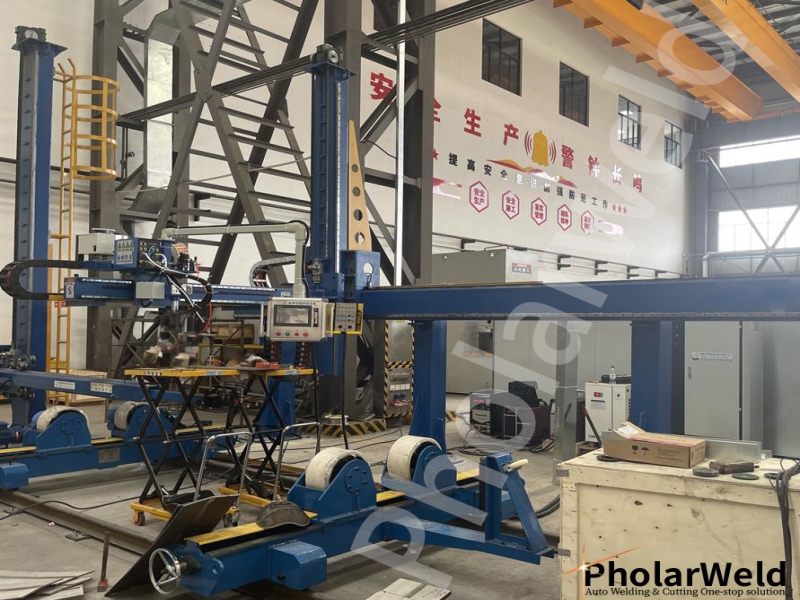
Several welding machine setups can handle both longitudinal and circular seams, but the machine must be designed to change the direction of movement between the workpiece and welding torch. A common choice is a combination longitudinal and circumferential welding machine, often used for tanks, pressure vessels, pipes, and other cylindrical parts. A welding manipulator with a suitable rotating fixture can also perform both jobs by moving the torch along the length for a straight seam and rotating the workpiece for a circular seam. Column and boom robotic welding system can offer similar flexibility when paired with the right positioning equipment. For smaller fabrication jobs, a CNC welding system may also be programmed for both seam types. The best option depends on the workpiece size, material, weld length, required accuracy, and production volume. Before choosing a machine, check whether its travel system, workholding setup, torch position, and control system can support both welding directions without complicated manual adjustments.
What Is The Working Principle Of Gantry Automatic Welding Machine?
A gantry automatic welding machine works by moving the welding torch along a fixed path while the workpiece stays in a controlled position. The machine uses a gantry frame with rails, drive motors, and a welding head that can travel horizontally or vertically, depending on the machine design. Before welding starts, the operator places and aligns the workpiece, sets the welding speed, current, voltage, and other required parameters, then starts the automatic cycle. As the gantry moves, the torch follows the programmed welding path and maintains a steady travel speed. For a large steel structure, for example, the machine can move across a long seam without the operator manually guiding the torch. This steady movement helps create more uniform welds and reduces the effect of hand fatigue. Many gantry systems can also include automatic wire feeding, flux delivery, seam tracking, and monitoring functions, making them useful for long and repeated welds in heavy fabrication.
What Is The Working Principle Of a Column & Boom Welding Manipulator?
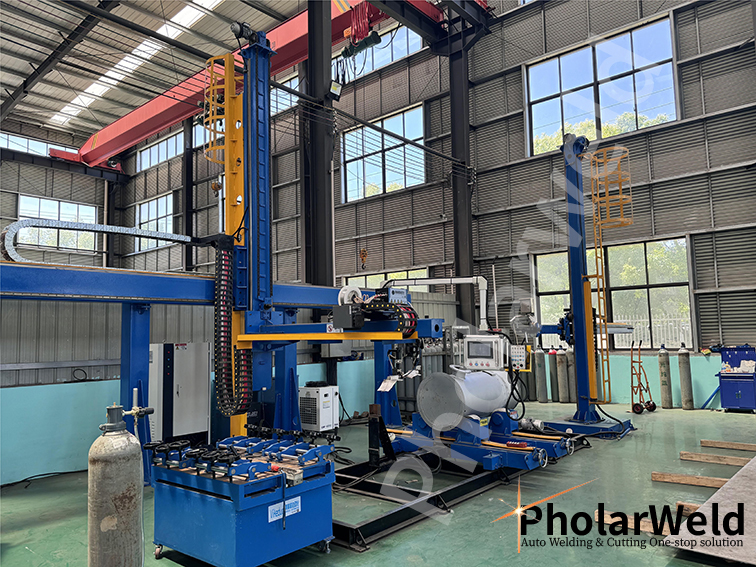
A column and boom welding manipulatorman works by positioning the welding torch at the right place while the workpiece is held or rotated separately. The column provides vertical movement, while the boom moves the welding head horizontally toward or away from the workpiece. During welding, the operator first places the job on a suitable fixture, such as a turning roll for a cylindrical vessel. The boom is then adjusted until the torch reaches the required seam position. Once the settings are confirmed, the manipulator moves the torch at a steady speed while the welding equipment maintains the selected current, voltage, and wire feed. For example, when welding a long seam on a tank, the boom can travel along the vessel while keeping the torch at a consistent distance. For circular seams, the workpiece can rotate on turning rolls while the boom keeps the torch in position. This coordinated movement allows the same setup to handle different welding positions with less manual torch handling.
Difference Between Gantry Welder Machine And Welding Manipulator
A gantrywelding machine and a welding manipulator both automate welding, but they are built around different movement systems. A gantry welder usually moves the welding head along a large frame or rail system, making it a good fit for long, straight welds on large plates, beams, and structural parts. The workpiece often stays in place while the gantry travels across it. A welding manipulator, such as a column and boom type, focuses more on positioning the welding torch around a workpiece. Its column can move vertically, while the boom moves horizontally. When paired with turning rolls, it can weld both longitudinal and circular seams on cylindrical vessels and tanks. For example, a factory producing pressure vessels may choose a column and boom manipulator for greater flexibility, while a steel fabrication shop working mainly with long plate seams may prefer a gantry system. The right choice depends on the shape of the workpiece, seam direction, working area, and level of automation required.
Application Scenarios Of Gantry Welder And Welding Manipulator
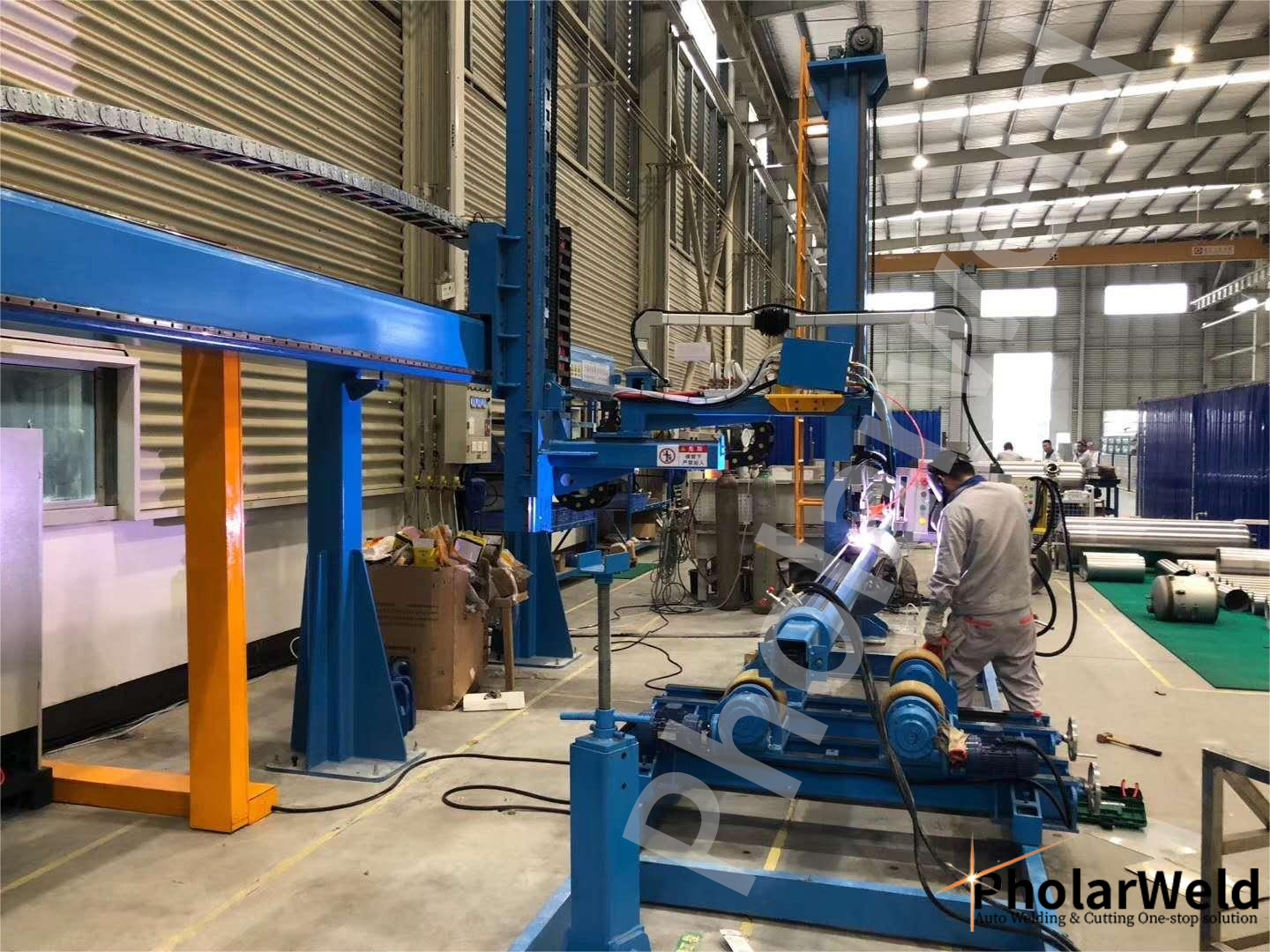
Gantry welders and industrial welding machine are both used in heavy fabrication, but each fits different working conditions. A gantry welder is often used when the workpiece is large, flat, or has long straight seams. Steel plates, beams, bridges, ship components, and large structural frames are common examples. The gantry can travel along rails and guide the welding head over a long distance, which helps keep weld speed and torch movement consistent. It is especially useful when the same type of long seam needs to be welded many times.
A welding manipulator works better when the piece being welded has various shapes or needs welds in different spots. It's commonly used for tanks, pressure vessels, boilers, pipes, and round structures. When paired with turning rolls, the manipulator holds the torch steady while the piece spins, making it easy to weld round seams. If adjusted, it can also move along straight seams.
For example, a tank manufacturer may use a manipulator to weld the straight joint along a shell and then weld the joint around the tank end without moving the torch by hand. A steel structure factory, on the other hand, may rely on a gantry system for long beam and plate welds. When selecting between the two, look at the workpiece shape, seam length, welding position, production volume, and available floor space.
Table of Contents
- What Welding Machines Can Handle Both Longitudinal And Circular Seams?
- What Is The Working Principle Of Gantry Automatic Welding Machine?
- What Is The Working Principle Of a Column & Boom Welding Manipulator?
- Difference Between Gantry Welder Machine And Welding Manipulator
- Application Scenarios Of Gantry Welder And Welding Manipulator