
 EN
EN
 EN
EN AR
AR BG
BG HR
HR CS
CS NL
NL FR
FR DE
DE EL
EL IT
IT JA
JA KO
KO PL
PL PT
PT RO
RO RU
RU ES
ES SV
SV IW
IW ID
ID VI
VI HU
HU TH
TH TR
TR FA
FA MS
MS

Choosing automated welding equipment is not simply about picking the fastest machine or the newest technology. Pipe manufacturers need equipment that matches their pipe size, material, production volume, welding method, and quality requirements. A machine that works well for one factory may be a poor fit for another. For example, a manufacturer producing small batches of different pipe welding machine may need flexible equipment, while a high-volume plant may benefit more from a dedicated automated line. Before making a purchase, manufacturers should look at the full production process, from pipe preparation and positioning to welding, inspection, and maintenance. A careful evaluation can help avoid costly equipment changes later.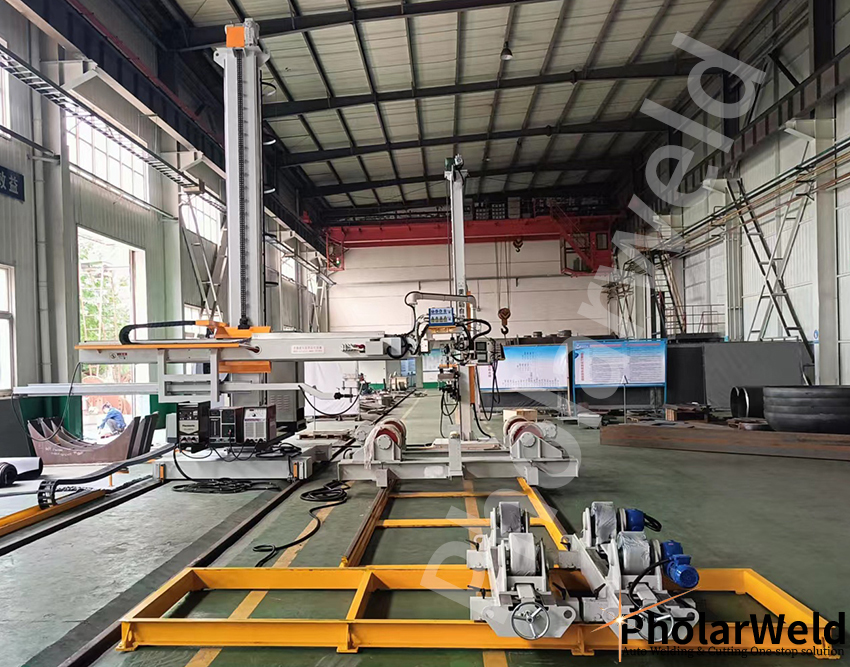
Why Is Automated Welding More Reliable and Efficient Than Manual Welding?
Automated welding has become a practical choice for pipe manufacturers that need steady production and consistent weld quality. Manual welding depends heavily on the skill, attention, and working condition of each operator. Even an experienced welder can produce small differences in weld position, speed, heat input, or filler material during a long production shift. Automated equipment follows programmed welding parameters with much less variation. This helps manufacturers maintain more consistent results from one pipe to the next.
A good example is a factory producing hundreds of welded pipes every day. With manual welding, operators may need to adjust their technique as pipe sizes change or fatigue builds up during the shift. These small changes can lead to uneven welds, more rework, and slower production. An automated system can keep travel speed, welding current, torch movement, and other settings within the selected range.
Automation makes it possible to increase the overall efficiency of production. Once the equipment is adjusted to meet the particular welding requirements, most of the operation can be completed automatically without the direct intervention of a skilled welder during the cycle of welds: employees can monitor the operation of automatic machines by loading components into automated fixture of the machines, control weld preparation, watch, for instance, that the slag doesn't spoil the profile of weld, etc. It is quite obvious that in this case skill and experience of a welder cannot be underestimated when determining set-up variables, dealing with an exception, or making a quality judgement.
Another advantage is repeatability. When the same pipe specification is produced regularly, manufacturers can save proven welding programs and use them again. This reduces the time spent adjusting settings for every production run.
Still, automation is not automatically better for every application. If production involves many different pipe designs or very small batches, a fully automated system may not provide enough value. Manufacturers should compare production volume, labor requirements, weld quality targets, and setup time before making the switch. The goal is not simply to remove manual work, but to create a welding process that is safer, more stable, and easier to control.
Applications and Advantages of Welding Manipulators
Welding manipulators are useful when pipe manufacturers need to handle large or long workpieces while keeping the welding torch in a stable position. Instead of asking a welder to hold and move the torch manually for an extended period, the manipulator controls torch movement along the required welding path. This can make the process easier to manage, especially when working with large-diameter pipes, pressure vessels, tanks, and other heavy cylindrical parts.
A common application is longitudinal or circumferential welding of large pipes. The pipe can be positioned on suitable turning equipment while the welding manipulator moves the torch at a controlled speed. The operator can adjust welding parameters and monitor the process without having to physically maintain the torch position throughout the entire weld. This is especially helpful when the weld is long and requires steady movement.
Welding manipulators can also be used for flange welding, pipe-to-component connections, and fabrication of large steel structures. Depending on the design, the equipment may provide vertical, horizontal, or boom movement, allowing the torch to reach different welding positions. Before selecting one, manufacturers should check the required working range, load capacity, boom travel, and compatibility with the welding process.
One major advantage is consistency. A manipulator can maintain a more stable torch angle and travel speed than manual operation. When the same welding procedure is repeated many times, this can help reduce variation between welds. It may also lower the amount of rework caused by inconsistent torch movement.
There is also a practical benefit for operators. Handling a heavy welding torch for hours can be tiring and may force workers into uncomfortable positions. A manipulator takes over much of this physical movement, allowing operators to work from a more suitable position.
For example, a pipe factory producing large-diameter welded sections may find that a manipulator reduces welding time while making the work easier to supervise. The best results come when the manipulator is matched with the pipe size, welding process, positioning equipment, and production speed rather than treated as a standalone machine.
Applications and Advantages of Orbital Welding Machine
Orbital welding machines are designed for applications where a pipe needs a clean, consistent weld around its full circumference. Instead of having a welder move the torch around the pipe by hand, the machine guides the welding head along a controlled circular path. This makes orbital welding especially useful when manufacturers need repeatable results on the same type of pipe or tube. It is commonly used for stainless steel, alloy steel, and other materials where weld quality needs close control. Before selecting an orbital welding machine, manufacturers should consider pipe diameter, wall thickness, material, joint design, welding process, and production volume.
One of the main applications is tube and pipe welding in industries such as food processing, pharmaceuticals, chemical processing, power generation, and semiconductor manufacturing. These industries often require smooth and reliable welds because the inside surface of the pipe may come into contact with liquids, gases, or other sensitive materials. Orbital welding can help produce uniform welds with controlled heat input, which is useful when distortion and contamination need to be kept low.
The technology is also helpful for repetitive production. For example, a manufacturer making stainless steel tubing assemblies may have hundreds of similar joints to complete. With manual welding, the torch angle and travel speed can change slightly from one joint to another. An orbital system can follow the same programmed welding cycle, giving the operator a more repeatable process.
Another advantage is process control. Many orbital welding machines allow users to set welding current, travel speed, pulse settings, shielding gas, and other parameters for different stages of the weld. These settings can be saved and reused when the same product is manufactured again.
However, orbital welding is not suitable for every pipe application. Joint accessibility, pipe size, wall thickness, and joint preparation all affect whether the equipment will work effectively. Manufacturers should first test representative samples and confirm that the machine can achieve the required weld quality before investing in a full production system.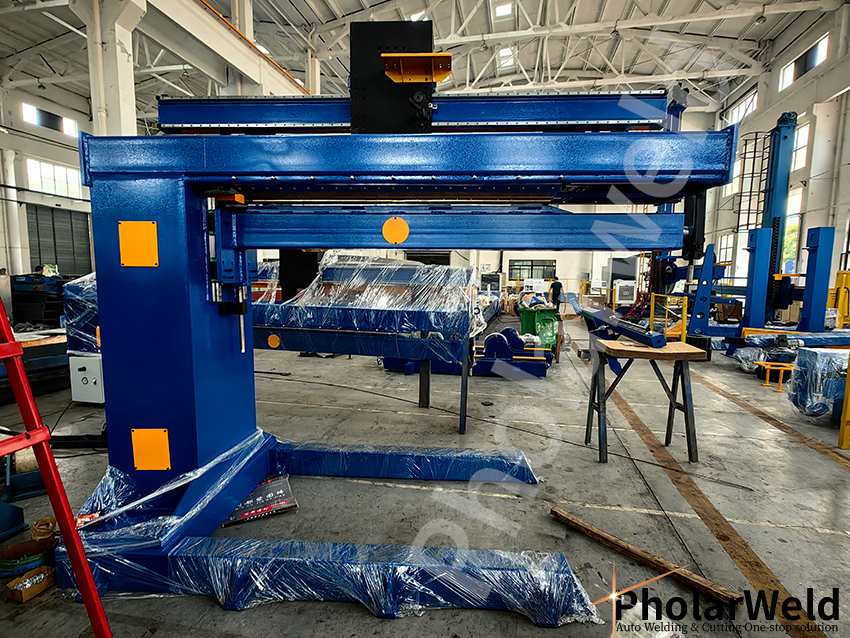
Which Is Better for Pipe Production: Welding Manipulator or Orbital Welder?
Choosing between a welding manipulator and an orbital welder depends on what type of pipe production you are running. Neither machine is automatically better for every factory. They are designed for different working conditions, pipe sizes, weld types, and production needs. A welding manipulator is generally more suitable for large and heavy workpieces where the welding torch needs controlled movement over a long weld. An orbital welder is better suited to smaller pipe and tube joints that require a controlled weld around the pipe circumference.
For example, a manufacturer producing large-diameter pipe welder may choose a welding manipulator because the equipment can support long welding operations and work alongside a turning or positioning system. The pipe can rotate while the manipulator keeps the welding torch at a steady position. This setup is useful when weld length, pipe weight, and production volume are high.
An orbital welder works differently. The welding head travels around the pipe automatically, making it a good choice for applications that require repeatable circumferential welds. Stainless steel tubing used in pharmaceutical, food processing, or clean industrial systems is a typical example. When many similar joints must be welded, an orbital system can provide consistent travel speed, torch movement, and welding parameters.
Manufacturers should also look at setup flexibility. If the factory handles many large pipe sizes and different fabrication jobs, a welding manipulator may offer useful flexibility when paired with suitable positioning equipment. If production involves many repeated tube joints with strict weld quality requirements, an orbital welder may provide better process control.
The best choice should be based on several factors: pipe diameter, wall thickness, material, joint design, weld length, production volume, required weld quality, and available floor space. Labor requirements and operator training should also be included in the comparison.
A practical approach is to list the factory's most common pipe specifications and calculate how many welds are completed each day. From there, manufacturers can compare cycle time, setup time, equipment cost, maintenance, and expected rework. This gives a clearer answer than choosing based only on the machine's advertised speed or automation level.