
 EN
EN
 EN
EN AR
AR BG
BG HR
HR CS
CS NL
NL FR
FR DE
DE EL
EL IT
IT JA
JA KO
KO PL
PL PT
PT RO
RO RU
RU ES
ES SV
SV IW
IW ID
ID VI
VI HU
HU TH
TH TR
TR FA
FA MS
MS

Choosing between an automatic welding machine and manual welding is not always a simple decision. The right choice depends on the type of work you do, the number of parts you need to weld, your budget, and the skill level of your team. A small repair shop may get better value from manual welding, while a factory making thousands of the same parts often benefits from automation. Each method has clear strengths and some limits. By understanding how they work in real production, you can make a choice that matches your workload, improves efficiency, and helps you control costs without paying for features you do not really need.
Working Principle of Automatic Welding Systems
Automatic welding systems are designed to complete welding tasks with little or no manual control during the welding process. Instead of relying on a welder to guide the torch by hand, the machine follows a programmed path and keeps key welding settings steady from start to finish. This helps produce welds that are more consistent, especially when the same parts are welded repeatedly.
The process usually begins by placing the workpiece in a fixture or jig. This keeps every part in the correct position before welding starts. Once the workpiece is secured, the operator selects a welding program based on the material, joint design, and thickness. The system then controls the movement of the welding torch, wire feeding, travel speed, voltage, and current according to the preset parameters.
Many robotic welding systemau use sensors to monitor the welding process while it is running. These sensors can detect the position of the joint, check the arc condition, or measure the distance between the torch and the workpiece. If small changes happen during production, the machine can make minor adjustments to keep the weld on track. This reduces defects that may happen with manual operation.
For example, an automotive factory welding hundreds of identical vehicle frames every day often uses robotic welding cells. Each frame is placed in the same position, and the robot repeats the same welding path with high accuracy. Since every cycle follows the same program, the finished welds remain uniform across the entire production batch.
Automatic welding systems can work with several welding methods, including MIG, TIG, laser welding, and plasma welding. The choice depends on the product requirements, material type, and production goals. Some systems are fully automated with robotic arms, while others are semi-automatic and still require an operator to load parts or start each welding cycle.
Although these systems handle most of the welding work, regular maintenance is still important. Cleaning the torch, checking wire feeders, replacing worn contact tips, and verifying sensor accuracy all help keep the equipment running smoothly. A well-maintained automatic welding machine delivers stable performance, reduces downtime, and supports higher production efficiency over the long term.
Working Principle of Manual Welding
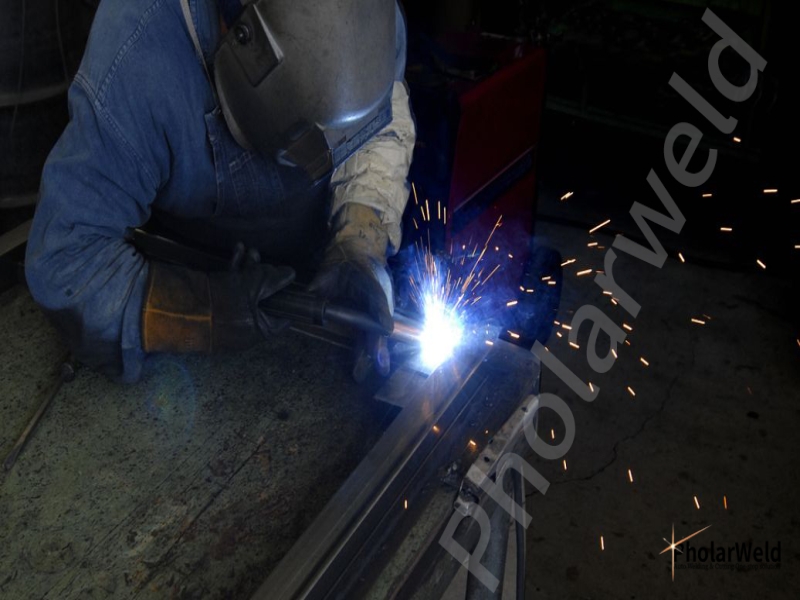
Manual welding depends on the skill and control of the welder throughout the entire process. Instead of following a programmed path, the welder holds the welding torch or electrode holder by hand and guides it along the joint while adjusting movement based on what they see. Every weld is shaped by the operator's experience, steady hand, and ability to react to changing conditions.
The process starts by cleaning the workpiece and preparing the joint. Rust, oil, paint, or dirt should be removed because these can weaken the weld. The welder then chooses the right welding method, electrode or filler wire, and machine settings based on the material and its thickness. After setting the current and voltage, an arc is created between the electrode and the workpiece to generate enough heat to melt the base metal and filler material.
As the weld progresses, the welder controls the travel speed, torch angle, arc length, and filler metal placement. These small adjustments happen continuously. If the gap between two pieces changes slightly or the material begins to heat up, the welder can respond right away by changing the welding speed or angle. This flexibility is one of the biggest strengths of manual welding.
A good example is repairing a cracked steel gate or fixing construction equipment on a job site. Every crack may have a different shape or size, making it difficult to use an automated system. An experienced welder can inspect the damaged area, adjust the welding technique as needed, and complete the repair even when working in tight spaces or outdoors.
Manual welding is commonly used with methods such as stick welding (SMAW), MIG welding, and TIG welding. Each process requires different levels of skill, but they all rely on the operator to produce a strong and clean weld. For small workshops, custom fabrication, maintenance work, and one-off projects, manual welding often provides the flexibility needed to handle a wide range of jobs.
To achieve good results, welders should inspect their equipment before starting, keep the electrode or torch in good condition, and practice maintaining a steady hand. Regular practice helps improve weld quality, reduce mistakes, and build the confidence needed to handle different materials and welding positions. Even with modern technology available, manual welding remains an essential skill across many industries because of its versatility and ability to adapt to changing work conditions.
Advantages of Automatic Welding Systems
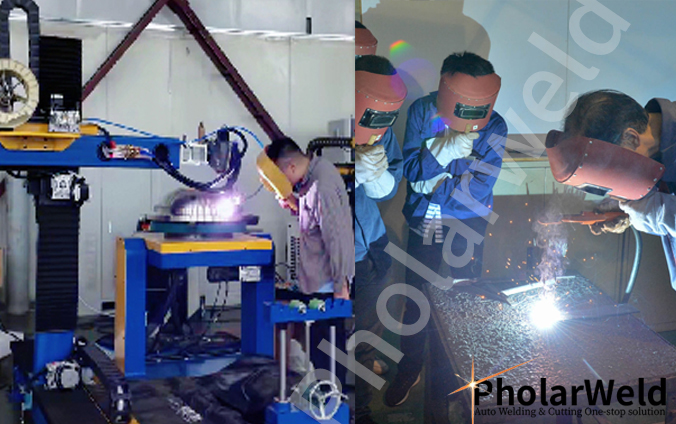
Automatic welding systems offer many benefits for businesses that produce the same products every day. By reducing the amount of manual work during welding, these systems help improve consistency, increase production speed, and lower the chance of human error. They are widely used in industries such as automotive manufacturing, shipbuilding, heavy equipment production, and metal fabrication where large numbers of identical parts need to be welded.
One of the biggest advantages is consistent weld quality. Since the machine follows the same programmed path every time, weld size, penetration, and appearance remain uniform across each workpiece. This consistency helps reduce defects, rework, and product waste. For example, a company producing steel storage racks can expect each weld to meet the same quality standard throughout the production run.
Automatic welding also increases productivity. Once the welding program has been created and tested, the machine can operate continuously with very little interruption. Operators mainly focus on loading and unloading parts, while the equipment handles the welding itself. This allows manufacturers to complete more products in less time compared to manual welding, especially during high-volume production.
Another advantage is lower labor requirements for repetitive tasks. Instead of depending on several skilled welders to perform the same operation, one trained operator may be able to supervise an automated welding cell. This can help companies manage labor shortages while allowing experienced welders to focus on custom jobs, repairs, or complex welding projects that require human judgment.
Safety is another important benefit. Automatic welding systems reduce direct exposure to welding arcs, sparks, heat, and fumes because operators can remain at a safer distance during operation. Many systems are installed inside enclosed work cells with safety guards, which lowers the risk of workplace injuries.
Automatic welding can also reduce material waste. Stable welding parameters help prevent problems such as excessive spatter, uneven weld beads, or incomplete fusion. Using materials more efficiently helps lower production costs over time while improving the overall quality of finished products.
Although the initial investment is higher than manual welding equipment, automatic welding systems often provide long-term value for businesses with steady production needs. When production volumes are high and the same parts are welded repeatedly, the savings in labor, improved efficiency, and consistent quality can make automation a practical and cost-effective choice.
Disadvantages of Manual Welding
Manual welding is a reliable and flexible process, but it also has some challenges that become more noticeable as production demands increase. Since every weld depends on the operator's skill, experience, and concentration, the final results can vary from one person to another. This is one reason why many manufacturers choose automation for high-volume production, while manual welding remains common for repair work and custom fabrication.
One of the main disadvantages is inconsistent weld quality. Even experienced welders can produce slightly different welds throughout a long workday. Changes in hand movement, travel speed, torch angle, or fatigue can affect the appearance and strength of the weld. When hundreds of identical parts need to be welded, maintaining the same quality on every piece becomes more difficult.
Manual welding is also slower than automated welding for repetitive jobs. Every weld requires the operator to position the torch, guide it by hand, and inspect the finished joint before moving to the next part. This limits the number of products that can be completed in a shift. For example, a workshop making large batches of steel frames may find that manual welding cannot keep up with customer demand during busy periods.
Another drawback is the heavy reliance on skilled workers. Learning to weld well takes time, practice, and proper training. If experienced welders are unavailable or leave the company, production quality and efficiency may suffer until new employees develop the necessary skills. Finding qualified welders can also be difficult in some areas.
Manual welding can lead to higher labor costs for large production runs. Since each weld requires direct involvement from an operator, businesses often need more workers to increase production. This adds to payroll costs and makes it harder to scale production quickly.
Worker safety is another concern. Welders spend long hours close to high temperatures, bright arcs, sparks, and welding fumes. Protective equipment greatly reduces these risks, but the operator still faces more direct exposure than someone supervising an automated welding system. Long periods of welding can also cause physical strain on the hands, shoulders, neck, and back.
Despite these disadvantages, manual welding remains the right choice for many jobs. It works well for maintenance, field repairs, custom metal fabrication, and projects where every workpiece is different. Understanding its limitations simply helps businesses decide when manual welding is the best fit and when automation may offer greater efficiency.
Comparison of Automated Welding and Traditional Manual Welding
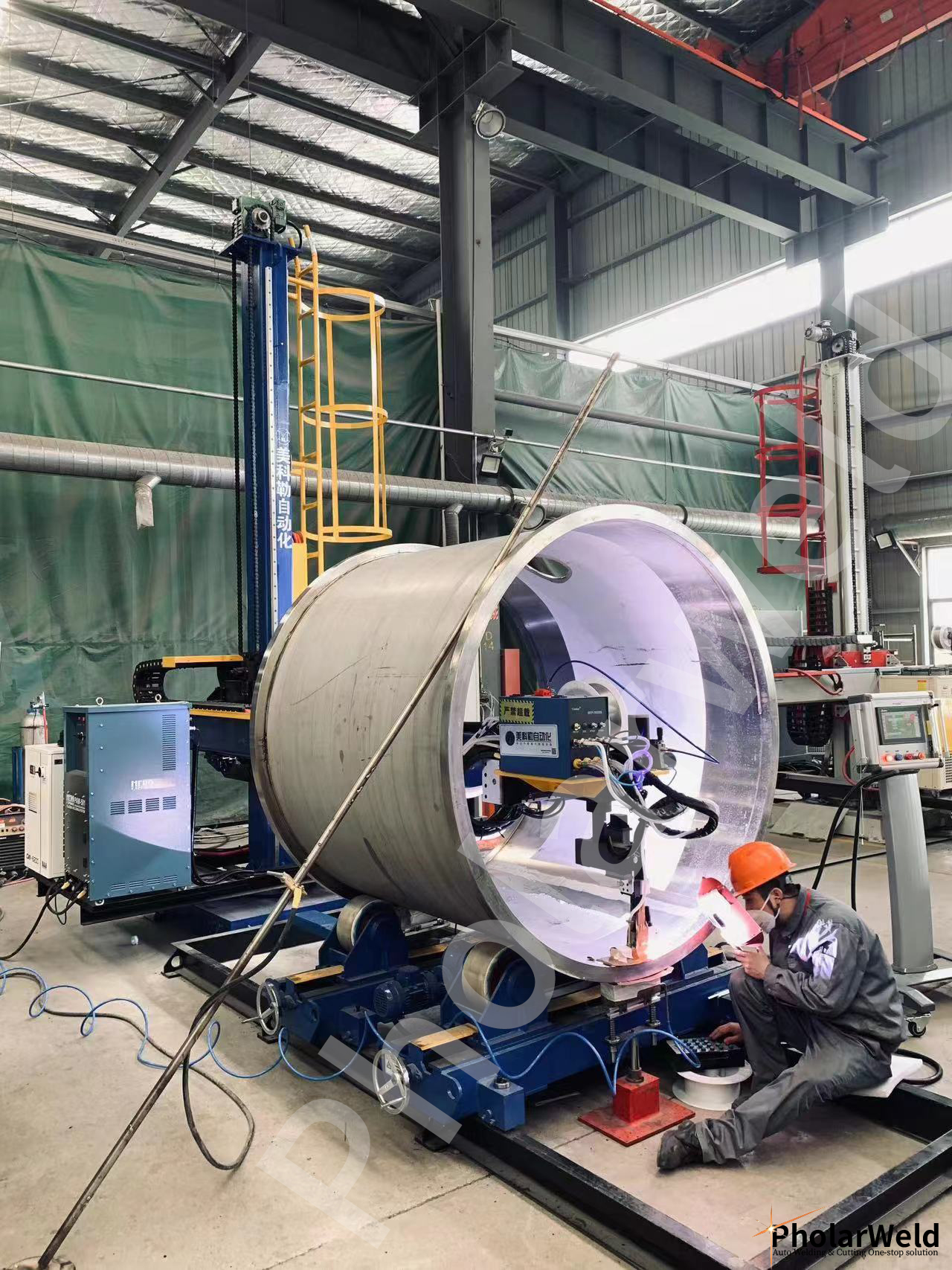
Automatic welding and traditional manual welding each have their own strengths. The better choice depends on the type of work, production volume, budget, and quality requirements. A small fabrication shop making custom products has different needs from a factory producing thousands of identical parts every week. Looking at the differences side by side makes it easier to choose the right method.
One of the biggest differences is consistency. Welding automation solutions follows the same programmed settings and welding path every cycle, producing nearly identical welds on repeated parts. Manual welding depends on the operator's skill and experience, so slight differences in weld appearance and quality are normal, even among experienced welders.
Production speed is another key factor. Automatic welding systems can operate continuously with very little downtime once they are set up. This makes them a strong choice for large production runs. Manual welding takes more time because the welder controls every movement by hand. For small batches or one-off projects, this slower pace is often acceptable because flexibility is more important than speed.
The level of flexibility also differs. Manual welding is well suited for repair work, custom fabrication, and projects with different part sizes or shapes. A welder can quickly adjust technique when working on damaged equipment or unusual joints. Automatic welding works best when the same product is made repeatedly and the welding path rarely changes. If product designs change often, updating programs and fixtures may require extra time.
Cost matters too. Manual welding tools are usually cheaper to buy, so they work well for small shops or businesses on a tight budget. Automatic welding systems cost more at first because you need to pay for the machines, setup, and special parts. But many companies save money in the long run by working faster, wasting less material, and needing fewer workers.
Skill requirements are also different. Manual welding relies heavily on trained welders who can control the welding process from start to finish. Automatic welding still requires skilled operators, but their role focuses more on programming, setup, equipment monitoring, and maintenance rather than guiding every weld by hand.
There is no single solution that fits every business. Companies handling high-volume, repetitive production often benefit from automatic welding because of its speed and consistent quality. Businesses focused on repairs, custom fabrication, or low-volume jobs often find manual welding to be the more practical and cost-effective option. Choosing the right method starts with understanding your production goals, available budget, and the type of welding work you perform every day.